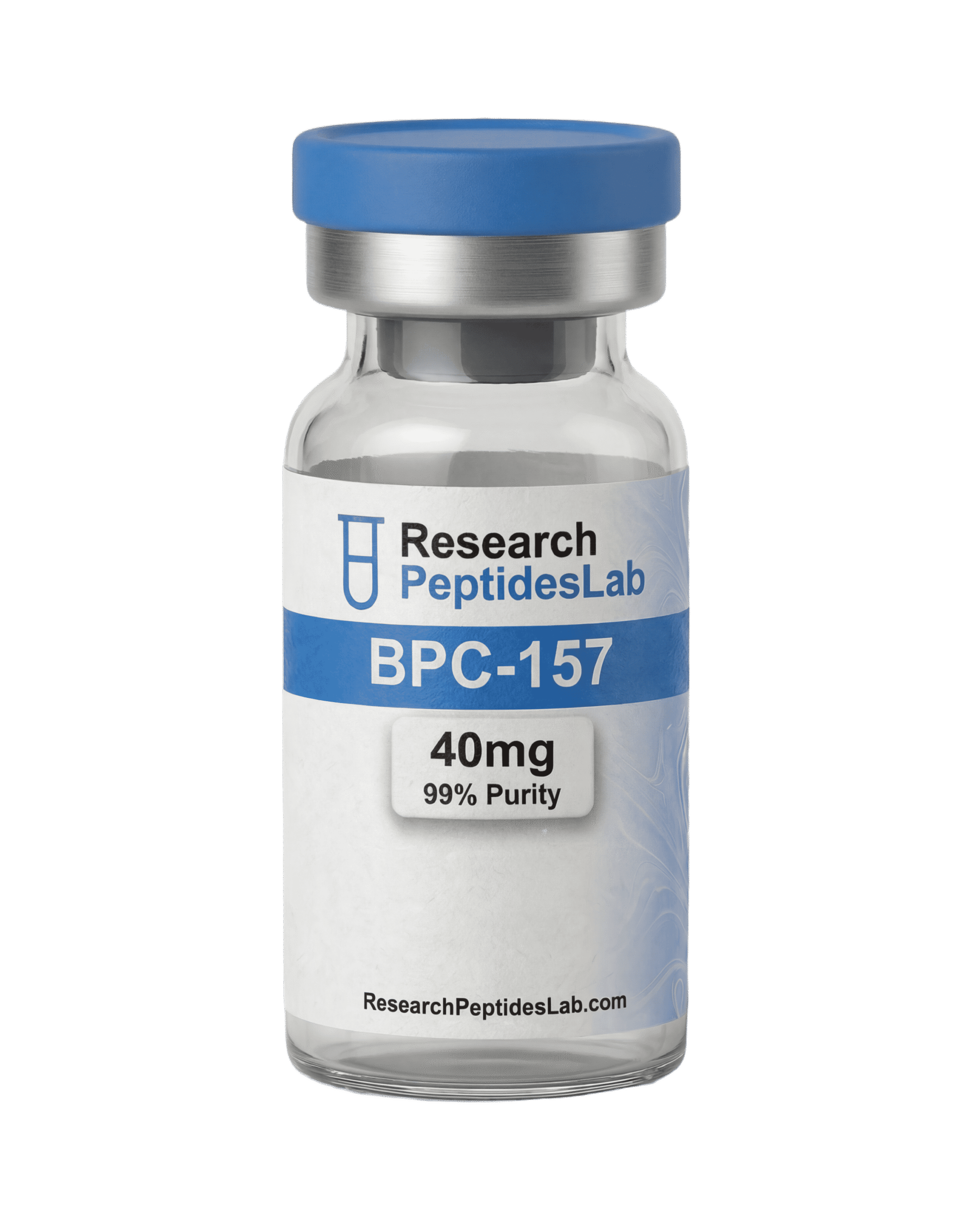
BPC-157
BPC-157 is a synthetic pentadecapeptide derived from gastric protective proteins, widely investigated in tissue repair and regeneration research. Studies have examined its interactions with nitric oxide systems, growth factor modulation, and angiogenesis pathways across multiple tissue types in laboratory models. For research purposes only.
Also known as: Body Protection Compound 157 | Category: Healing, Gut Health, Tissue Repair, Recovery, Regeneration Research
Weekdays before 2PM EST
With Every Batch
Tested in USA



 ACH
Zelle
ACH
Zelle
Research Overview
BPC-157 (Body Protection Compound-157) is a synthetic pentadecapeptide consisting of 15 amino acids, derived from a partial sequence of human gastric juice protein. It is one of the most extensively studied cytoprotective and regenerative peptides in preclinical research, with over 100 published studies demonstrating a wide spectrum of protective activities across multiple organ systems.
Mechanism of Action
BPC-157 interacts with the nitric oxide (NO) system, modulating both NO synthase and NO receptor pathways. It upregulates growth factor receptors including EGF, VEGF, and FGF, promoting angiogenesis and granulation tissue formation. The peptide also modulates the dopaminergic, serotonergic, and GABAergic neurotransmitter systems. Its cytoprotective effects are observed across the gastrointestinal tract, musculoskeletal system, nervous system, and vascular endothelium.
Experimental Applications
Research applications include gastric and intestinal mucosal healing models, tendon-to-bone healing studies, muscle crush injury recovery, bone fracture repair, nerve regeneration assays, vascular protection after ischemia-reperfusion injury, and NSAID-induced gastroprotection studies.
Compound Information
Technical specifications
What is BPC-157?
| Type | Synthetic Peptide (Gastric) |
| CAS Number | 137525-51-0 |
| Molecular Weight | 1,419.53 g/mol |
| Amino Acids | 15 |
| Molecular Formula | C₆₂H₉₈N₁₆O₂₂ |
Stability Information
Loading structure…
Estimated plasma concentration over time
Compound Specifications
| Compound Type | Pentadecapeptide (15 amino acids) |
| Purity | ≥ 99% |
| Appearance | White lyophilized powder |
| Storage | -20°C long-term; 2-8°C short-term |
| Testing Methods | HPLC, Mass Spectrometry |
| Packaging | Sealed sterile vial |
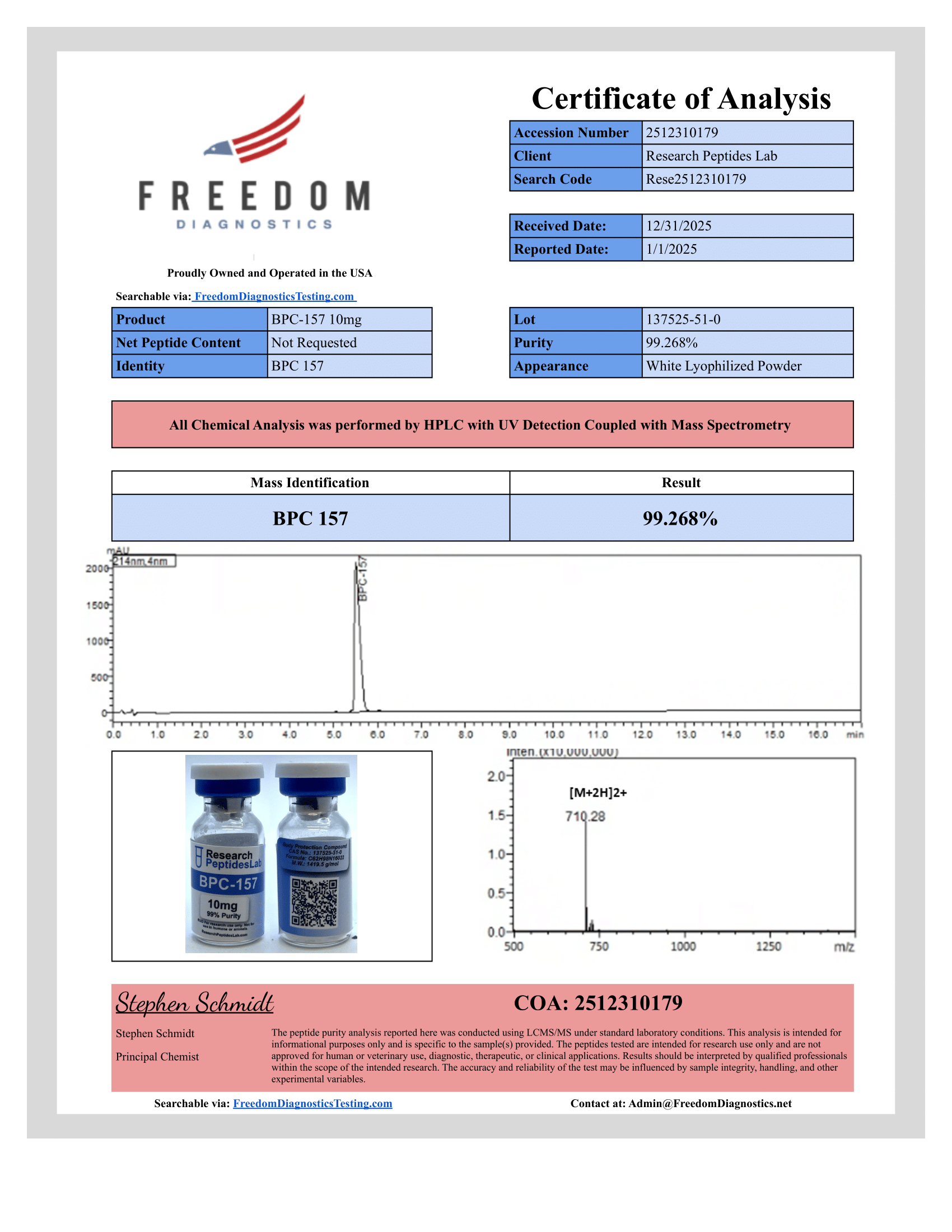
Certificate of Analysis
Lab Testing Notes
Every batch is verified by independent third-party laboratories using HPLC for purity analysis (?99%) and Mass Spectrometry for molecular weight confirmation. Full COA available on this page.
Mechanism of Action
BPC-157 interacts with the nitric oxide (NO) system, modulating both NO synthase and NO receptor pathways. It upregulates growth factor receptors including EGF, VEGF, and FGF, promoting angiogenesis and granulation tissue formation. The peptide also modulates the dopaminergic, serotonergic, and GABAergic neurotransmitter systems. Its cytoprotective effects are observed across the gastrointestinal tract, musculoskeletal system, nervous system, and vascular endothelium.
Experimental Applications
Research applications include gastric and intestinal mucosal healing models, tendon-to-bone healing studies, muscle crush injury recovery, bone fracture repair, nerve regeneration assays, vascular protection after ischemia-reperfusion injury, and NSAID-induced gastroprotection studies.
Reconstitution Guidelines
Reconstitute with bacteriostatic water (0.9% benzyl alcohol). Inject slowly along the vial wall — do not spray directly onto peptide. Gently swirl until dissolved. Recommended: 1–2 mL per vial. Store at 2–8°C. Use within 30 days.
How Does BPC-157 Compare?
Regenerative Peptides
| Property | BPC-157 | TB-500 (Thymosin Beta-4) | GHK-Cu |
|---|---|---|---|
| Type | Synthetic Peptide (Gastric) | Synthetic Peptide | Copper Peptide Complex |
| Molecular Weight | 1,419.53 | 4,963.44 | 401.91 |
| Amino Acids | 15 | 43 | 3 |
| CAS Number | 137525-51-0 | 77591-33-4 | 49557-75-7 |
| Formula | C₆₂H₉₈N₁₆O₂₂ | C₂₁₂H₃₅₀N₅₆O₇₈S | C₁₄H₂₄N₆O₄ · Cu |
| Current | View Product → | View Product → |
Commonly Researched Together
Complementary compounds frequently paired with BPC-157 in published studies
Sources & References
Peer-reviewed research
Stable Gastric Pentadecapeptide BPC 157: Novel Therapy in Gastrointestinal Tract
View SourcePentadecapeptide BPC 157 and its Effects on a Nitric Oxide System
View SourceRelated Peptides
Premium research peptides, lab-tested for purity