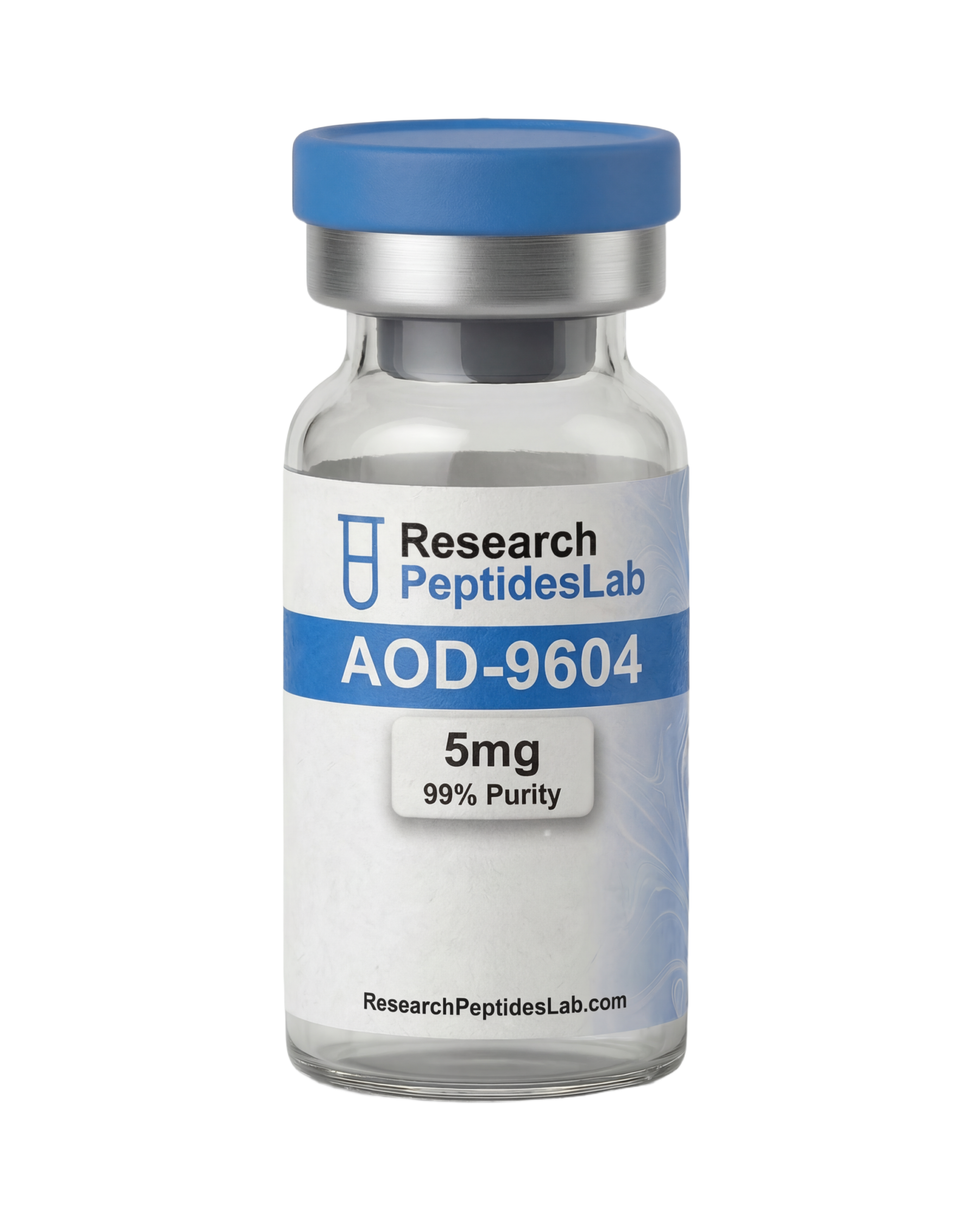
AOD-9604
AOD-9604 is a modified fragment (176-191) of human growth hormone studied for lipolytic pathway activation independent of growth-promoting effects. Research focuses on its selective fat metabolism mechanisms and beta-3 adrenergic receptor interactions in laboratory models. For research purposes only.
Also known as: Anti-Obesity Drug 9604, HGH Fragment | Category: Fat Loss, Lipolysis, Body Composition, Metabolic, Weight Loss Research
Weekdays before 2PM EST
With Every Batch
Tested in USA



 ACH
Zelle
ACH
Zelle
Research Overview
AOD-9604 is a modified fragment of human growth hormone (hGH), specifically amino acids 177–191. This peptide fragment has been extensively studied for its role in lipid metabolism regulation. Unlike full-length hGH, AOD-9604 does not affect IGF-1 levels or insulin resistance, making it a subject of significant research interest for its targeted metabolic activity without broader growth hormone effects.
Mechanism of Action
AOD-9604 mimics the lipolytic action of natural growth hormone by stimulating the beta-3 adrenergic receptor pathway. It enhances fat oxidation and inhibits lipogenesis (fat accumulation) without affecting blood sugar or tissue growth. The peptide activates fat-specific signaling cascades that promote triglyceride breakdown in adipose tissue while having no observed effect on muscle, bone, or cartilage growth.
Experimental Applications
Research applications include in vitro adipocyte metabolism studies, animal model investigations of lipid metabolism and body composition, pharmacokinetic profiling of hGH fragment activity, and comparative studies against full-length growth hormone to isolate fat-specific metabolic pathways.
Compound Information
Technical specifications
What is AOD-9604?
| Type | Modified hGH Fragment (176-191) |
| CAS Number | 221231-10-3 |
| Molecular Weight | 1,815.08 g/mol |
| Amino Acids | 16 |
| Molecular Formula | C₇₈H₁₂₃N₂₃O₂₃S₂ |
Stability Information
Loading structure…
Estimated plasma concentration over time
Compound Specifications
| Compound Type | Peptide Fragment (hGH 177-191) |
| Purity | ≥ 99% |
| Appearance | White lyophilized powder |
| Storage | -20°C long-term; 2-8°C short-term |
| Testing Methods | HPLC, Mass Spectrometry |
| Packaging | Sealed sterile vial |
Certificate of Analysis
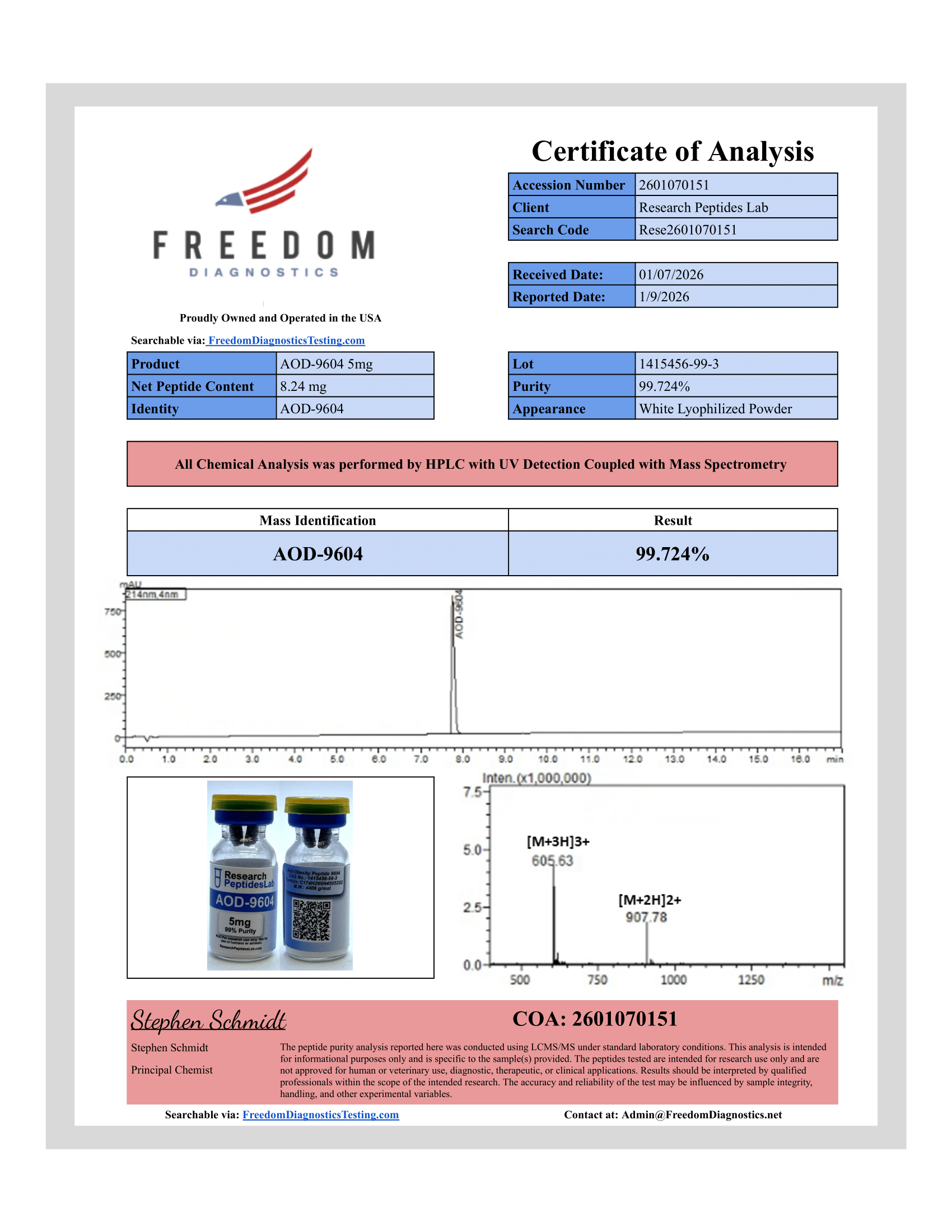
Lab Testing Notes
Each batch undergoes independent third-party testing via HPLC (High Performance Liquid Chromatography) for purity verification and Mass Spectrometry for molecular weight confirmation. Certificates of Analysis are available on this product page and in our Research Library.
Mechanism of Action
AOD-9604 mimics the lipolytic action of natural growth hormone by stimulating the beta-3 adrenergic receptor pathway. It enhances fat oxidation and inhibits lipogenesis (fat accumulation) without affecting blood sugar or tissue growth. The peptide activates fat-specific signaling cascades that promote triglyceride breakdown in adipose tissue while having no observed effect on muscle, bone, or cartilage growth.
Experimental Applications
Research applications include in vitro adipocyte metabolism studies, animal model investigations of lipid metabolism and body composition, pharmacokinetic profiling of hGH fragment activity, and comparative studies against full-length growth hormone to isolate fat-specific metabolic pathways.
Reconstitution Guidelines
Reconstitute with bacteriostatic water (0.9% benzyl alcohol). Inject slowly along the inner vial wall — do not spray directly onto the powder. Gently swirl until completely dissolved. Do not shake. Recommended volume: 1–2 mL per vial. Store reconstituted solution at 2–8°C and use within 30 days.
How Does AOD-9604 Compare?
GLP-1 & Metabolic Peptides
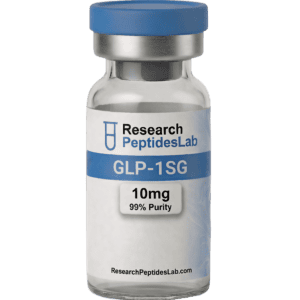
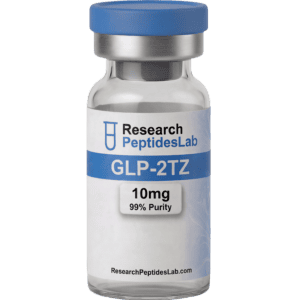
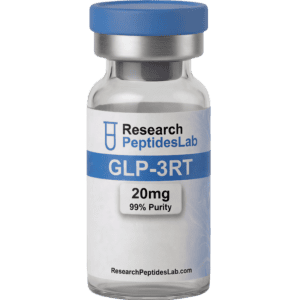
| Property | AOD-9604 | GLP-1SG | GLP-2TZ | GLP-3RT |
|---|---|---|---|---|
| Type | Modified hGH Fragment (176-191) | GLP-1 Receptor Agonist | Dual GIP/GLP-1 Receptor Agonist | Triple GIP/GLP-1/Glucagon Agonist |
| Molecular Weight | 1,815.08 | 4,113.58 | 4,813.45 | 4,731.28 |
| Amino Acids | 16 | 31 | 39 | 39 |
| CAS Number | 221231-10-3 | 910463-68-2 | 2023788-19-2 | 2381089-83-2 |
| Formula | C₇₈H₁₂₃N₂₃O₂₃S₂ | C₁₈₇H₂₉₁N₄₅O₅₉ | C₂₂₅H₃₄₈N₄₈O₆₈ | C₂₂₁H₃₄₂N₄₆O₆₈ |
| Current | View Product → | View Product → | View Product → |
Sources & References
Peer-reviewed research
AOD9604 — A Novel Anti-Obesity Drug Which Does Not Alter Diabetogenic Activity of hGH
View SourceRelated Peptides
Premium research peptides, lab-tested for purity