NAD+
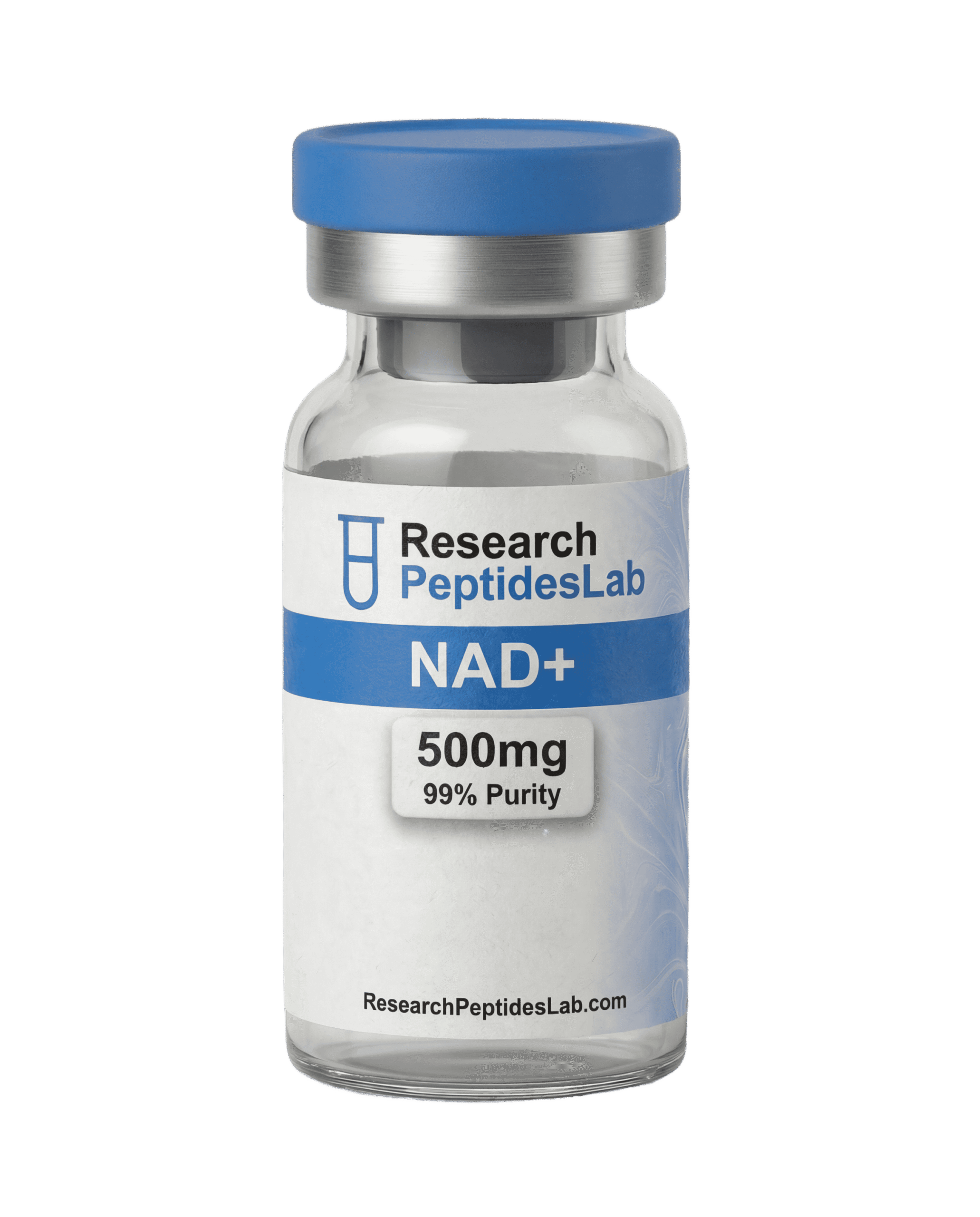
NAD+ is a critical coenzyme investigated in sirtuin activation, mitochondrial bioenergetics, and DNA repair (PARP) pathway research. Declining NAD+ levels are a primary biomarker in cellular aging studies, making it a cornerstone compound in longevity research. For research purposes only.
Also known as: Nicotinamide Adenine Dinucleotide, NAD Plus | Category: Cellular Energy, Anti-Aging, Longevity, Mitochondria Research
Weekdays before 2PM EST
With Every Batch
Tested in USA



 ACH
Zelle
ACH
Zelle
Research Overview
NAD+ (Nicotinamide Adenine Dinucleotide) is an essential coenzyme present in all living cells that serves as a critical mediator of cellular energy metabolism and signaling. Research into NAD+ biology has intensified dramatically since the discovery of its role as a substrate for sirtuins (SIRT1–SIRT7) and PARPs, linking it directly to aging, DNA repair, and metabolic regulation.
Mechanism of Action
NAD+ functions as a hydrogen carrier in redox reactions within the mitochondrial electron transport chain (Complexes I and III), directly powering oxidative phosphorylation and ATP synthesis. Beyond energy metabolism, NAD+ serves as a substrate for sirtuins (deacetylase enzymes that regulate gene expression and cellular stress response), PARPs (poly-ADP-ribose polymerases critical for DNA repair), and CD38 (involved in calcium signaling and immune function). NAD+ levels decline with age, driving research into supplementation strategies.
Experimental Applications
Used in sirtuin activity assays, PARP-mediated DNA repair studies, mitochondrial function measurements (Seahorse assays), cellular senescence research, aging biology, metabolic flux analysis, neuroprotection studies, and NAD+ biosynthesis pathway investigations.
Compound Information
Technical specifications
What is NAD+?
| Type | Coenzyme (Dinucleotide) |
| CAS Number | 53-84-9 |
| Molecular Weight | 663.43 g/mol |
| Molecular Formula | C₂₁H₂₇N₇O₁₄P₂ |
Stability Information
Loading structure…
Estimated plasma concentration over time
Compound Specifications
| Compound Type | Coenzyme (Dinucleotide) |
| Purity | ≥ 99% |
| Appearance | White to off-white powder |
| Storage | -20°C; protect from moisture and light |
| Testing Methods | HPLC, Enzymatic Activity Assay |
| Packaging | Sealed sterile vial |
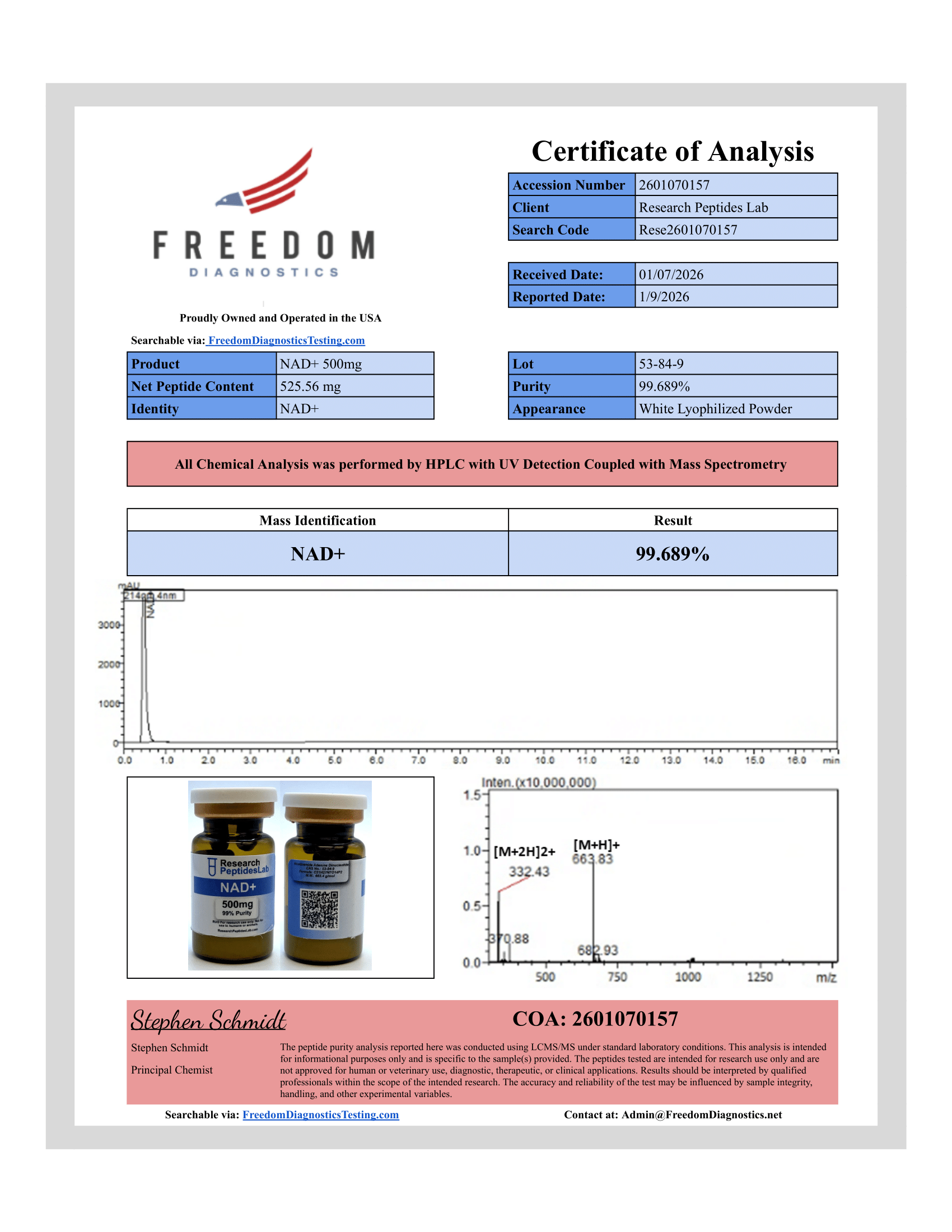
Certificate of Analysis
Lab Testing Notes
Purity verified via HPLC. Enzymatic activity confirmed by standard NAD+/NADH cycling assay. Each lot tested for moisture content and stability. COA provided with every order.
Mechanism of Action
NAD+ functions as a hydrogen carrier in redox reactions within the mitochondrial electron transport chain (Complexes I and III), directly powering oxidative phosphorylation and ATP synthesis. Beyond energy metabolism, NAD+ serves as a substrate for sirtuins (deacetylase enzymes that regulate gene expression and cellular stress response), PARPs (poly-ADP-ribose polymerases critical for DNA repair), and CD38 (involved in calcium signaling and immune function). NAD+ levels decline with age, driving research into supplementation strategies.
Experimental Applications
Used in sirtuin activity assays, PARP-mediated DNA repair studies, mitochondrial function measurements (Seahorse assays), cellular senescence research, aging biology, metabolic flux analysis, neuroprotection studies, and NAD+ biosynthesis pathway investigations.
Reconstitution Guidelines
Reconstitute with sterile saline or bacteriostatic water. Handle under reduced light conditions. Mix gently — do not vortex. Use immediately or store at 2–8°C for up to 7 days. NAD+ is sensitive to heat and light degradation.
How Does NAD+ Compare?
Longevity & Cellular Health
| Property | NAD+ | Epitalon (Epithalon) | MOTS-c | Thymosin Alpha-1 |
|---|---|---|---|---|
| Type | Coenzyme (Dinucleotide) | Synthetic Tetrapeptide | Mitochondrial-Derived Peptide | Immunomodulatory Peptide |
| Molecular Weight | 663.43 | 390.35 | 2,174.58 | 3,108.26 |
| Amino Acids | — | 4 | 16 | 28 |
| CAS Number | 53-84-9 | 307297-39-8 | 1627580-64-6 | 62304-98-7 |
| Formula | C₂₁H₂₇N₇O₁₄P₂ | C₁₄H₂₂N₄O₉ | C₁₀₁H₁₅₂N₂₈O₂₂S₂ | C₁₂₉H₂₁₅N₃₃O₅₅ |
| Current | View Product → | View Product → | View Product → |
Sources & References
Peer-reviewed research
Declining NAD+ Induces a Pseudohypoxic State Disrupting Nuclear-Mitochondrial Communication during Aging
View SourceRelated Peptides
Premium research peptides, lab-tested for purity