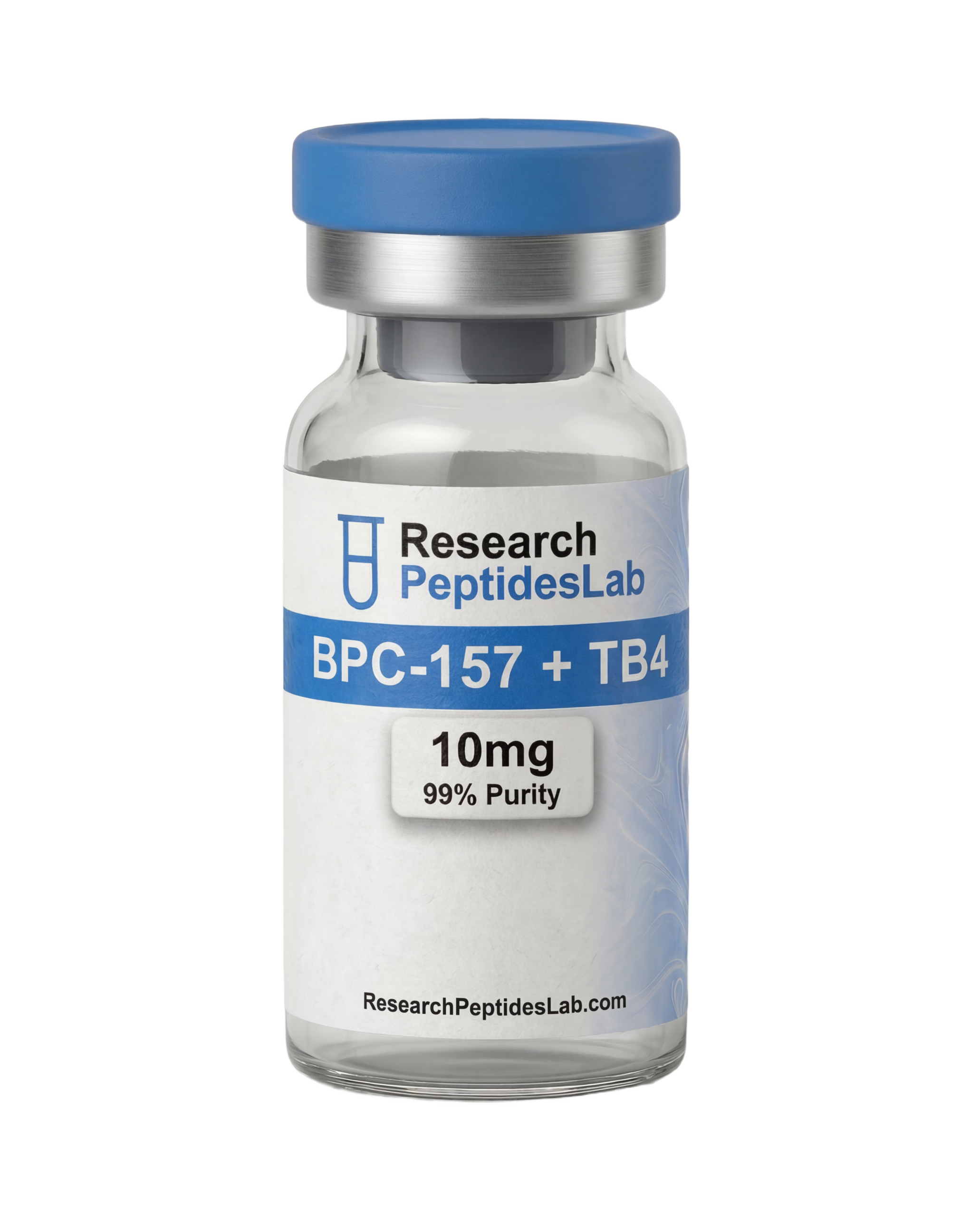
BPC+TB4 Blend
This research blend combines BPC-157 with Thymosin Beta-4 for synergistic tissue repair pathway investigation. The complementary mechanisms enable comprehensive dual-pathway healing cascade studies. For research purposes only.
Weekdays before 2PM EST
With Every Batch
Tested in USA








Buy now, pay later with Afterpay, Klarna & Affirm
Research Overview
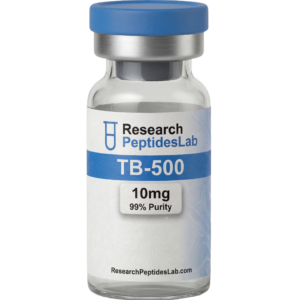
BPC+TB4 Blend combines two well-studied regenerative peptides: BPC-157 (Body Protection Compound) and Thymosin Beta-4 (TB-500). BPC-157 is a pentadecapeptide derived from human gastric juice, while TB-500 is a 43-amino acid peptide involved in cell migration and tissue repair. This combination is researched for potentially synergistic tissue-protective and regenerative effects.
Mechanism of Action
BPC-157 modulates the nitric oxide (NO) system, upregulates growth factor expression (EGF, VEGF), and promotes angiogenesis. TB-500 upregulates actin, a cell-building protein critical for cell migration, proliferation, and differentiation. Together, these peptides are theorized to provide complementary pathways for tissue repair — BPC-157 through vascular and cytoprotective mechanisms, and TB-500 through cellular motility and structural recovery.
Experimental Applications
Studied in animal models for combined tissue repair, wound healing acceleration, musculoskeletal injury recovery, gastrointestinal mucosal healing, and potential neuroprotective effects. Also used in comparative studies to evaluate synergistic versus individual peptide activity.
Compound Specifications
| Compound Type | Peptide Blend (BPC-157 + TB-500) |
| Purity | ≥ 99% |
| Appearance | White lyophilized powder |
| Storage | -20°C long-term; 2-8°C short-term |
| Testing Methods | HPLC, Mass Spectrometry |
| Packaging | Sealed sterile vial |
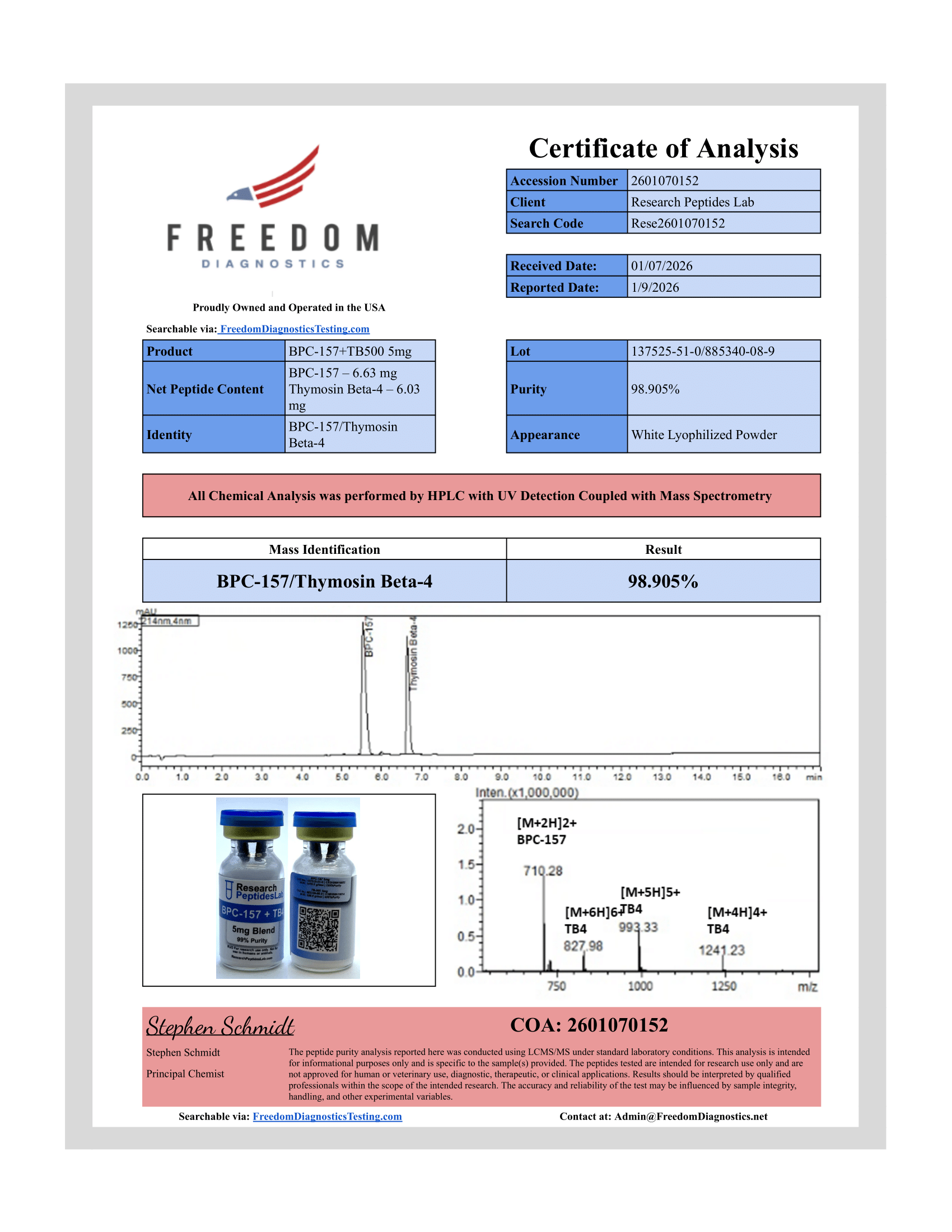
Certificate of Analysis
Lab Testing Notes
Each batch is independently tested for purity via HPLC and identity confirmation via Mass Spectrometry. Blend ratio and individual peptide integrity are verified. COA available on this page and in our Research Library.
Mechanism of Action
BPC-157 modulates the nitric oxide (NO) system, upregulates growth factor expression (EGF, VEGF), and promotes angiogenesis. TB-500 upregulates actin, a cell-building protein critical for cell migration, proliferation, and differentiation. Together, these peptides are theorized to provide complementary pathways for tissue repair — BPC-157 through vascular and cytoprotective mechanisms, and TB-500 through cellular motility and structural recovery.
Experimental Applications
Studied in animal models for combined tissue repair, wound healing acceleration, musculoskeletal injury recovery, gastrointestinal mucosal healing, and potential neuroprotective effects. Also used in comparative studies to evaluate synergistic versus individual peptide activity.
Reconstitution Guidelines
Reconstitute with bacteriostatic water. Inject slowly along the inner vial wall. Gently swirl until dissolved — do not shake. Recommended volume: 1–2 mL per vial. Store at 2–8°C after reconstitution. Use within 30 days.
Related Peptides
Premium research peptides, lab-tested for purity