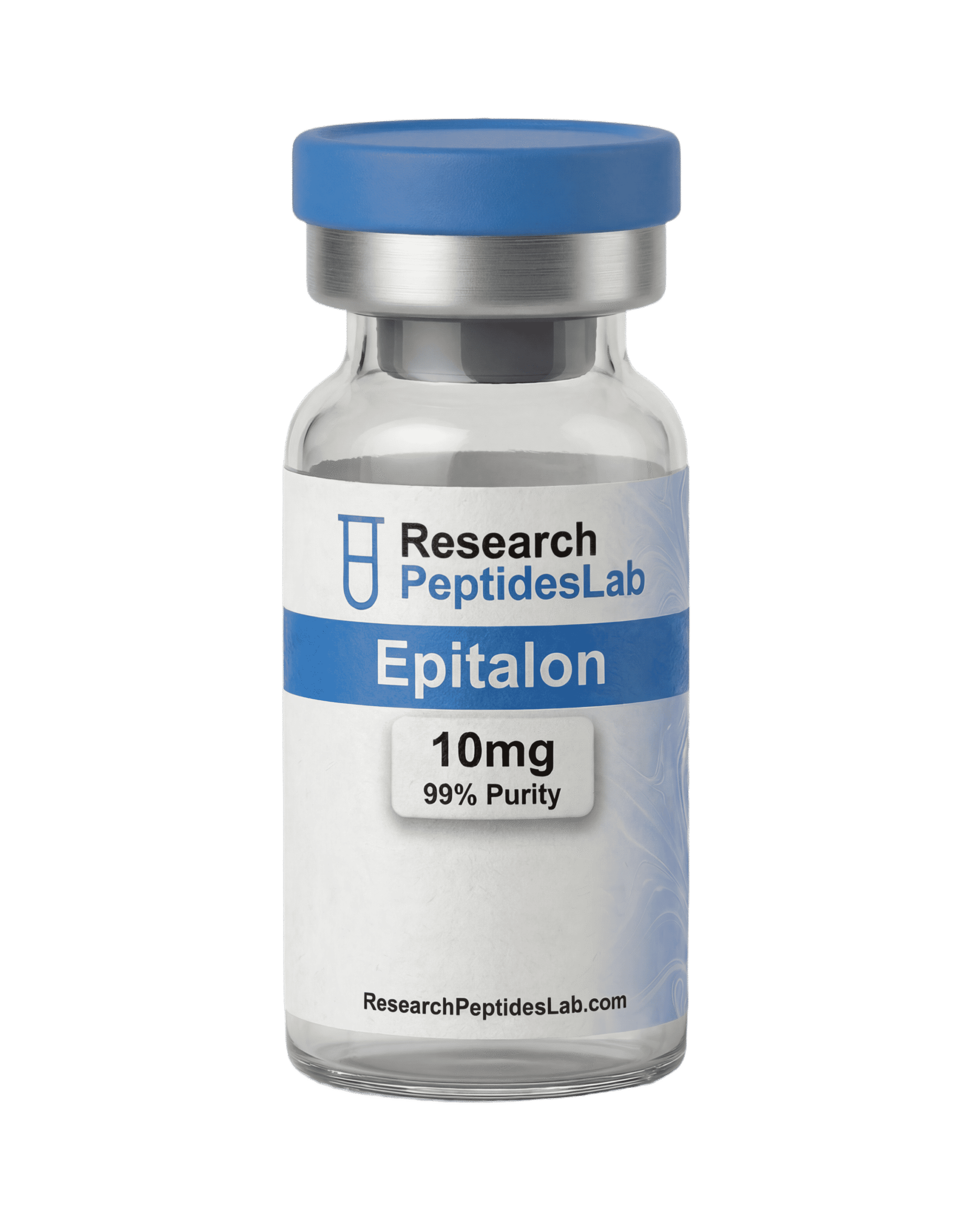
Epitalon
Epitalon is a synthetic tetrapeptide (Ala-Glu-Asp-Gly) studied for its effects on telomerase activation and telomere elongation in cellular research models. It is one of the few peptides directly investigated in the context of cellular senescence and biomarkers of cellular aging. For research purposes only.
Weekdays before 2PM EST
With Every Batch
Tested in USA








Buy now, pay later with Afterpay, Klarna & Affirm
Research Overview
Epitalon (Epithalon) is a synthetic tetrapeptide (Ala-Glu-Asp-Gly) based on epithalamin, a naturally occurring peptide produced by the pineal gland. It is the most studied compound in telomerase activation research, with foundational work by Professor Vladimir Khavinson spanning over 35 years. Epitalon has been investigated for its effects on telomere length maintenance and cellular senescence.
Mechanism of Action
Epitalon activates the enzyme telomerase (hTERT — human telomerase reverse transcriptase), which adds telomeric repeat sequences (TTAGGG) to chromosome ends. By counteracting telomere shortening during cell division, the peptide may delay replicative senescence. Additionally, Epitalon has been shown to modulate melatonin secretion patterns and influence circadian neuroendocrine regulation through its action on pineal gland function.
Experimental Applications
Research includes telomere length analysis in human somatic cell cultures, replicative lifespan studies in fibroblast models, pineal gland function and melatonin rhythm studies, antioxidant capacity assessment, and aging-related gene expression profiling.
Compound Specifications
| Compound Type | Synthetic Tetrapeptide |
| Purity | ≥ 99% |
| Appearance | White lyophilized powder |
| Storage | -20°C long-term; 2-8°C short-term |
| Testing Methods | HPLC, Mass Spectrometry |
| Packaging | Sealed sterile vial |
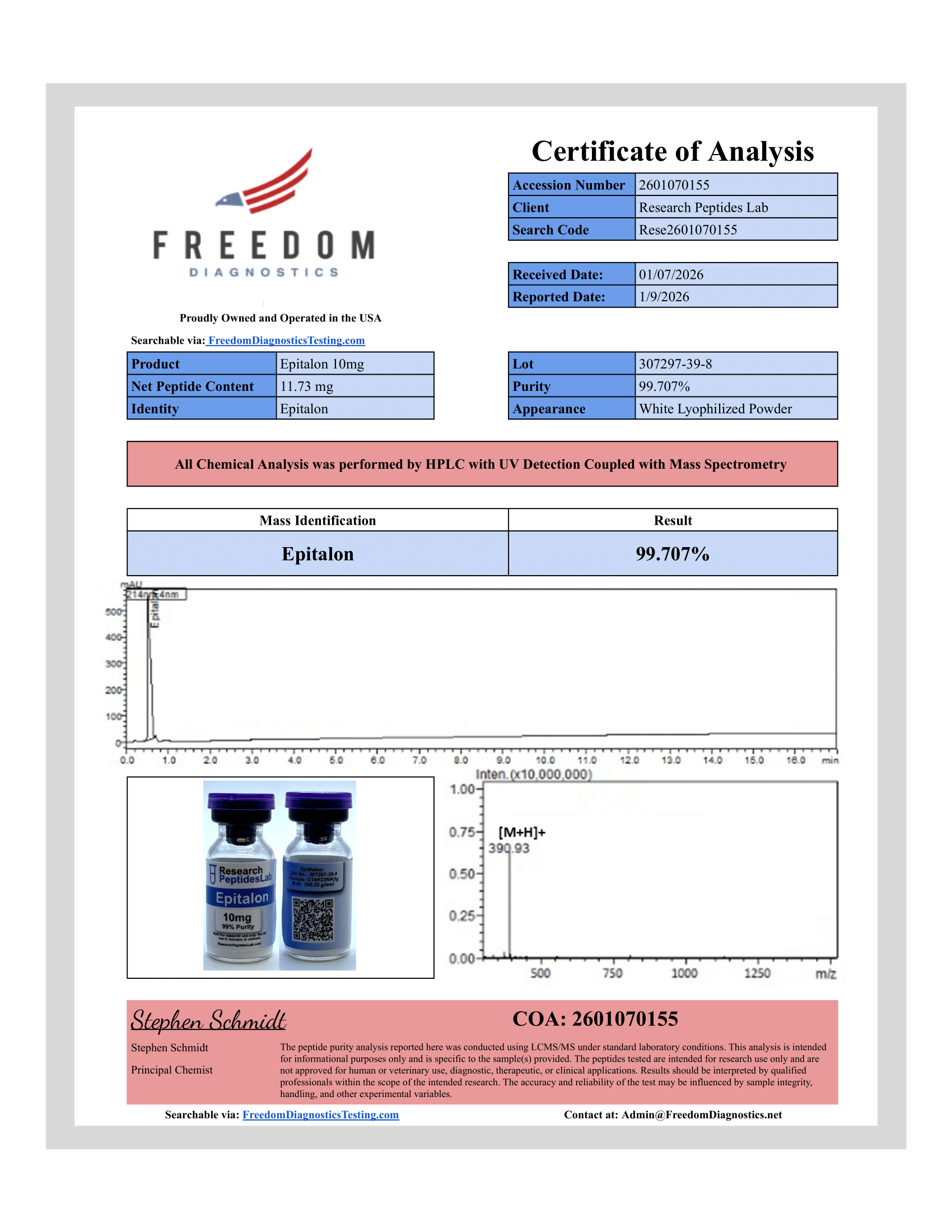
Certificate of Analysis
Lab Testing Notes
Third-party tested via HPLC for purity (?99%) and Mass Spectrometry for identity verification. Amino acid sequence confirmed against reference standard. COA included with every order.
Mechanism of Action
Epitalon activates the enzyme telomerase (hTERT — human telomerase reverse transcriptase), which adds telomeric repeat sequences (TTAGGG) to chromosome ends. By counteracting telomere shortening during cell division, the peptide may delay replicative senescence. Additionally, Epitalon has been shown to modulate melatonin secretion patterns and influence circadian neuroendocrine regulation through its action on pineal gland function.
Experimental Applications
Research includes telomere length analysis in human somatic cell cultures, replicative lifespan studies in fibroblast models, pineal gland function and melatonin rhythm studies, antioxidant capacity assessment, and aging-related gene expression profiling.
Reconstitution Guidelines
Reconstitute with bacteriostatic water (0.9% benzyl alcohol). Inject along the inner vial wall slowly. Gently swirl to dissolve — do not shake. Recommended: 1–2 mL per vial. Store at 2–8°C. Use within 30 days.
Related Peptides
Premium research peptides, lab-tested for purity