GHK-Cu
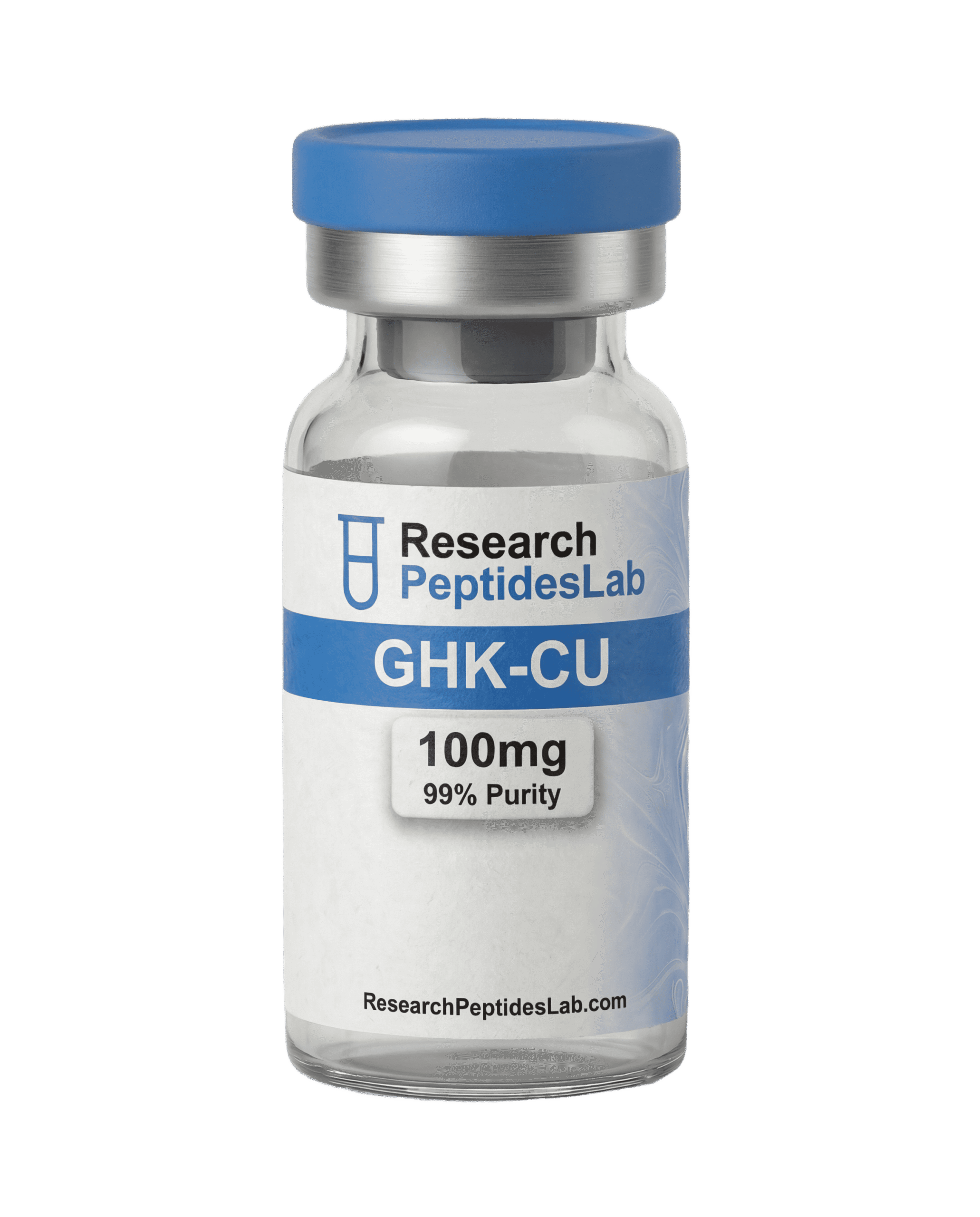
GHK-Cu is a naturally occurring copper tripeptide complex studied in tissue remodeling, collagen synthesis, and copper-dependent enzyme activation research. Laboratory investigations have demonstrated its involvement in gene expression modulation related to extracellular matrix biology. For research purposes only.
Weekdays before 2PM EST
With Every Batch
Tested in USA








Buy now, pay later with Afterpay, Klarna & Affirm
Research Overview
GHK-Cu (Glycyl-L-Histidyl-L-Lysine Copper) is a naturally occurring copper-binding tripeptide found in human plasma, saliva, and urine. First identified by Dr. Loren Pickart in 1973, GHK-Cu has been the subject of extensive research for its role in tissue remodeling, wound repair, and gene expression modulation. Studies have demonstrated its ability to influence over 4,000 human genes, resetting gene activity patterns toward a healthier state.
Mechanism of Action
GHK-Cu chelates copper(II) ions with high affinity, forming a stable tripeptide-copper complex. This complex activates tissue remodeling by stimulating collagen synthesis (types I and III), glycosaminoglycan production, and fibroblast proliferation. It modulates metalloproteinase activity (MMPs) to balance tissue breakdown and regeneration. The peptide also upregulates integrins and stem cell markers, attracts immune repair cells via chemotactic signaling, and exhibits antioxidant activity by modulating iron release from ferritin.
Experimental Applications
Used in wound healing kinetics studies, dermal fibroblast proliferation assays, collagen synthesis quantification, gene expression profiling (microarray/RNA-seq), anti-inflammatory pathway analysis, hair follicle organoid studies, and stem cell differentiation research.
Compound Specifications
| Compound Type | Copper Tripeptide Complex |
| Purity | ≥ 99% |
| Appearance | Blue lyophilized powder |
| Storage | -20°C long-term; 2-8°C short-term; protect from light |
| Testing Methods | HPLC, Mass Spectrometry, ICP-MS (copper content) |
| Packaging | Sealed sterile vial |
Certificate of Analysis
Lab Testing Notes
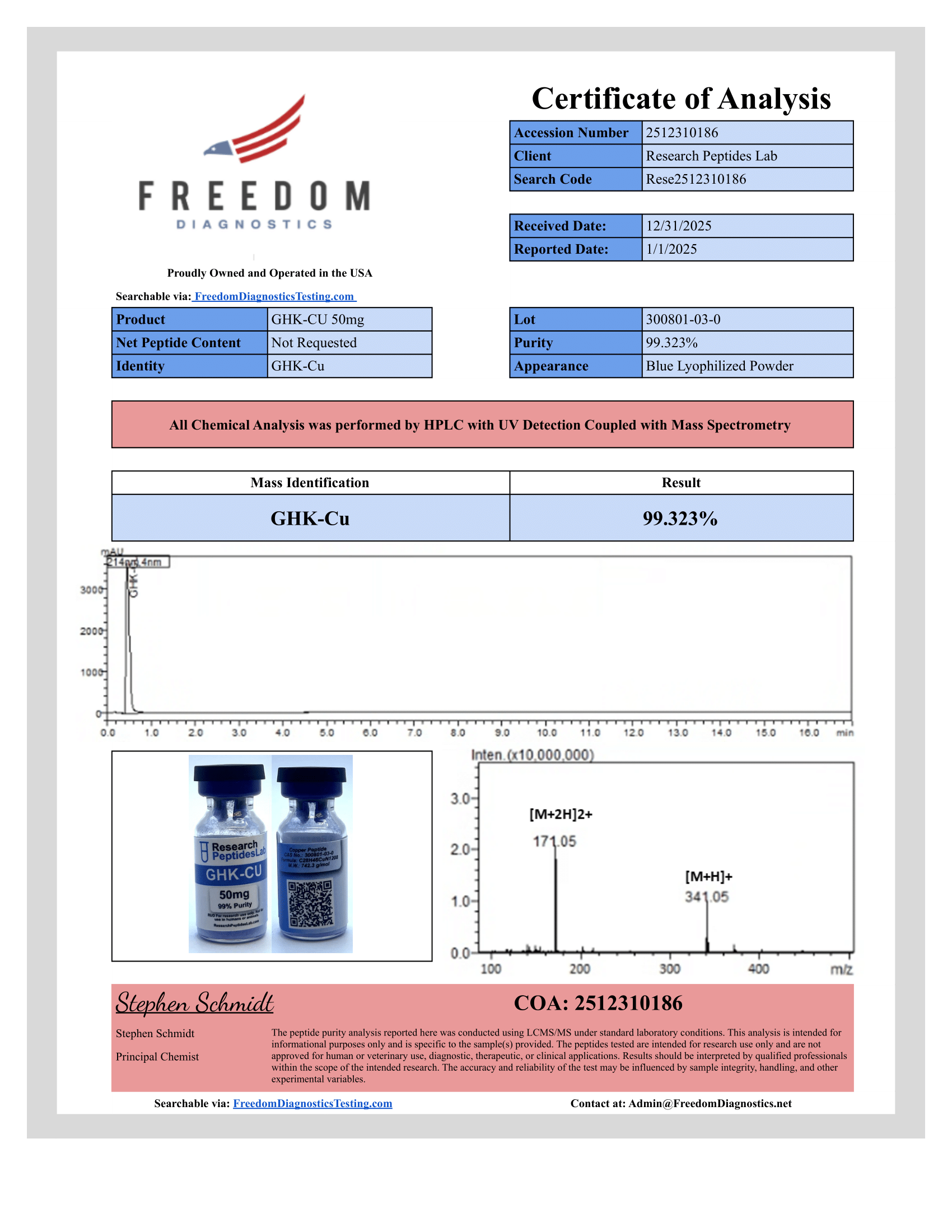
Tested via HPLC (purity), Mass Spectrometry (identity), and ICP-MS for copper content verification. Each batch confirmed for proper Cu²? chelation ratio. COA available on this page.
Mechanism of Action
GHK-Cu chelates copper(II) ions with high affinity, forming a stable tripeptide-copper complex. This complex activates tissue remodeling by stimulating collagen synthesis (types I and III), glycosaminoglycan production, and fibroblast proliferation. It modulates metalloproteinase activity (MMPs) to balance tissue breakdown and regeneration. The peptide also upregulates integrins and stem cell markers, attracts immune repair cells via chemotactic signaling, and exhibits antioxidant activity by modulating iron release from ferritin.
Experimental Applications
Used in wound healing kinetics studies, dermal fibroblast proliferation assays, collagen synthesis quantification, gene expression profiling (microarray/RNA-seq), anti-inflammatory pathway analysis, hair follicle organoid studies, and stem cell differentiation research.
Reconstitution Guidelines
Reconstitute with bacteriostatic water. Inject slowly along vial wall. Gently swirl — do not shake (copper complex is sensitive to agitation). Recommended: 1–2 mL per vial. Store at 2–8°C protected from light. Use within 21 days.
Related Peptides
Premium research peptides, lab-tested for purity