
Melanotan 1
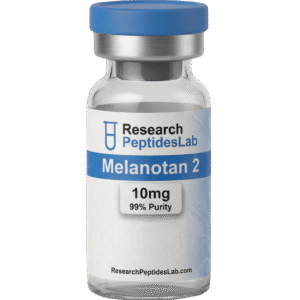
Melanotan is an alpha-MSH analog investigated for MC1R receptor activation and melanogenesis pathway research. Laboratory studies focus on its role in melanocyte stimulation and the biological mechanisms governing melanin biosynthesis. For research purposes only.
Weekdays before 2PM EST
With Every Batch
Tested in USA








Buy now, pay later with Afterpay, Klarna & Affirm
Research Overview
Melanotan 1 (Afamelanotide) is a synthetic linear analog of alpha-melanocyte-stimulating hormone (?-MSH) with 13 amino acids. It is the most clinically advanced melanocortin peptide, having received regulatory approval in Europe (Scenesse®) for erythropoietic protoporphyria. MT-1 is studied for its photoprotective properties and melanogenesis stimulation via the MC1R receptor.
Mechanism of Action
Melanotan 1 selectively binds to the melanocortin 1 receptor (MC1R) on melanocytes, activating the cAMP/PKA signaling pathway. This upregulates tyrosinase activity and melanin biosynthesis (eumelanogenesis), increasing the ratio of photoprotective eumelanin to phaeomelanin. The Nle4-DPhe7 substitutions confer enzymatic stability and enhanced receptor binding affinity compared to native ?-MSH.
Experimental Applications
Research includes melanocyte biology and melanogenesis pathway studies, UV photoprotection models, DNA damage prevention assays, skin pigmentation mechanisms, MC1R receptor signaling characterization, and comparative pharmacology against native ?-MSH and MT-II.
Compound Specifications
| Compound Type | Linear α-MSH Analog (13 amino acids) |
| Purity | ≥ 99% |
| Appearance | White lyophilized powder |
| Storage | -20°C long-term; 2-8°C short-term; protect from light |
| Testing Methods | HPLC, Mass Spectrometry |
| Packaging | Sealed sterile vial |
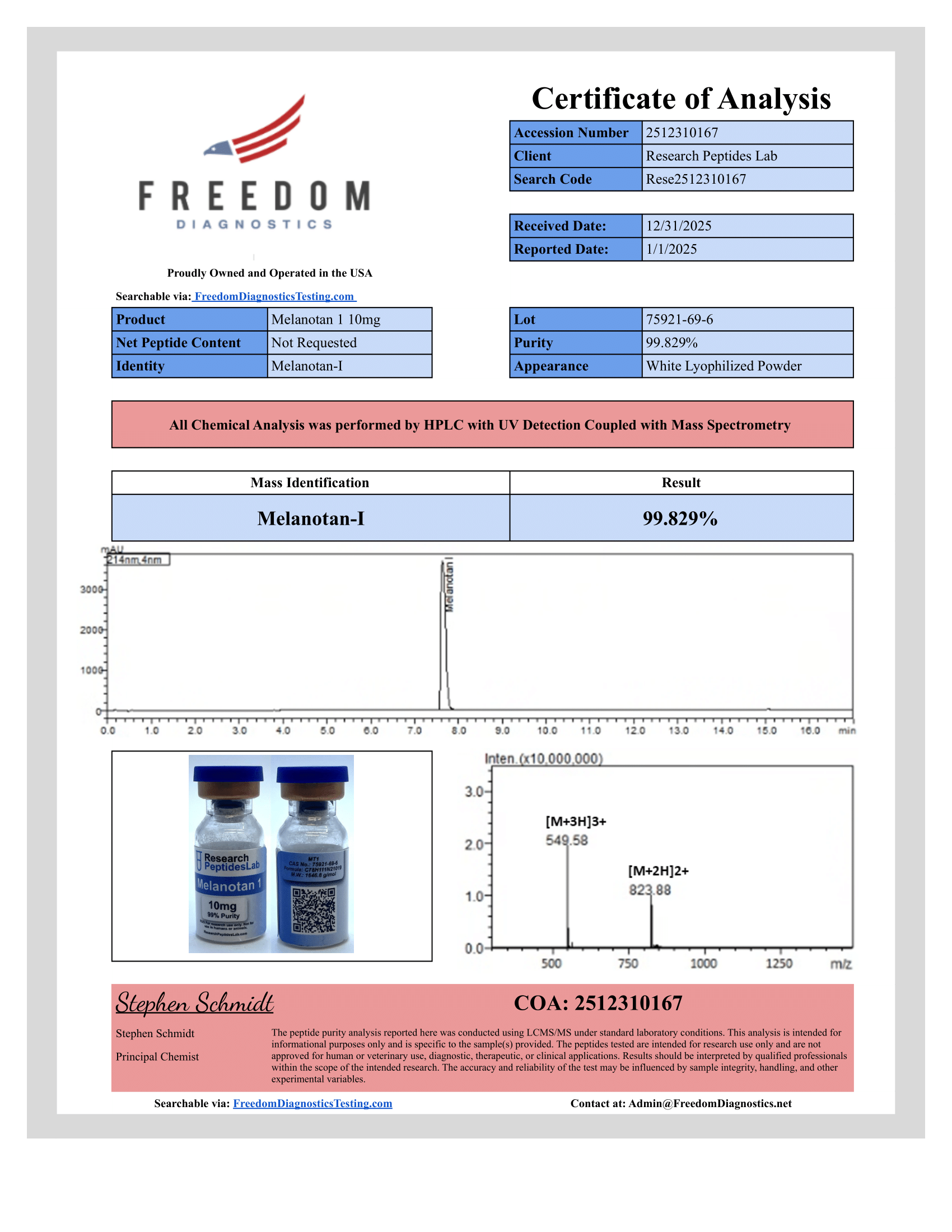
Certificate of Analysis
Lab Testing Notes
Third-party tested via HPLC (purity ?99%) and Mass Spectrometry (identity). COA included with every batch.
Mechanism of Action
Melanotan 1 selectively binds to the melanocortin 1 receptor (MC1R) on melanocytes, activating the cAMP/PKA signaling pathway. This upregulates tyrosinase activity and melanin biosynthesis (eumelanogenesis), increasing the ratio of photoprotective eumelanin to phaeomelanin. The Nle4-DPhe7 substitutions confer enzymatic stability and enhanced receptor binding affinity compared to native ?-MSH.
Experimental Applications
Research includes melanocyte biology and melanogenesis pathway studies, UV photoprotection models, DNA damage prevention assays, skin pigmentation mechanisms, MC1R receptor signaling characterization, and comparative pharmacology against native ?-MSH and MT-II.
Reconstitution Guidelines
Reconstitute with bacteriostatic water. Inject slowly along vial wall. Gently swirl — do not shake. Protect from light during handling. Recommended: 1–2 mL per vial. Store at 2–8°C. Use within 30 days.
Related Peptides
Premium research peptides, lab-tested for purity