GLP-3RT
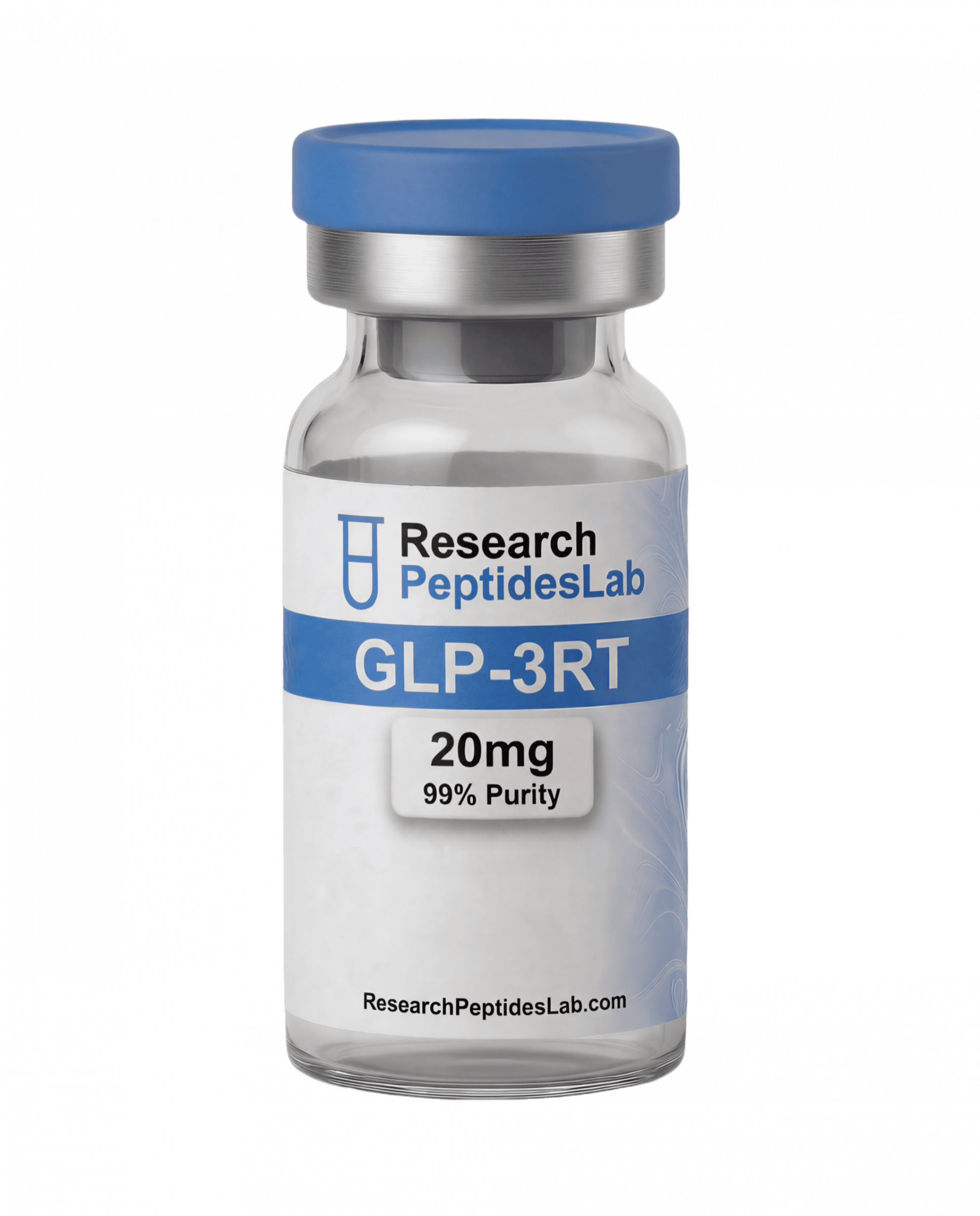
GLP-3RT is a novel triple-agonist peptide targeting GLP-1, GIP, and glucagon receptors simultaneously in research settings. As the first compound of its kind available for laboratory investigation, it enables study of the complex interplay between three metabolic signaling pathways. For research purposes only.
Also known as: Retatrutide | Category: GLP, Metabolic, Weight Loss, Triple Agonist Research
Weekdays before 2PM EST
With Every Batch
Tested in USA



 ACH
Zelle
ACH
Zelle
Research Overview
GLP-3RT is a novel triple agonist peptide that simultaneously activates GIP, GLP-1, and glucagon receptors. It represents the first investigational "triagonist" in its class. Phase 2 clinical trial data published in the New England Journal of Medicine demonstrated unprecedented efficacy in metabolic research endpoints, making it one of the most significant incretin-class compounds currently under investigation.
Mechanism of Action
GLP-3RT engages three distinct receptor systems: GLP-1R (glucagon-like peptide-1 receptor) — enhances insulin secretion, slows gastric emptying, and acts on hypothalamic appetite centers. GIPR (glucose-dependent insulinotropic polypeptide receptor) — potentiates insulin response and improves lipid metabolism. GCGR (glucagon receptor) — increases energy expenditure, promotes hepatic fat oxidation, and stimulates thermogenesis. The triple mechanism provides complementary metabolic effects beyond what dual agonists achieve.
Experimental Applications
Research applications include incretin receptor pharmacology, triple agonism vs. dual agonism comparative studies, energy expenditure and thermogenesis models, hepatic lipid metabolism, glucose-stimulated insulin secretion assays, gastric emptying kinetics, and appetite regulation neurocircuitry studies.
Compound Information
Technical specifications
What is GLP-3RT?
| Type | Triple GIP/GLP-1/Glucagon Agonist |
| CAS Number | 2381089-83-2 |
| Molecular Weight | 4,731.28 g/mol |
| Amino Acids | 39 |
| Molecular Formula | C₂₂₁H₃₄₂N₄₆O₆₈ |
Stability Information
Loading structure…
Estimated plasma concentration over time
Compound Specifications
| Compound Type | Triple Incretin Receptor Agonist (GLP-1/GIP/Glucagon) |
| Purity | ≥ 99% |
| Appearance | White lyophilized powder |
| Storage | -20°C long-term; 2-8°C short-term |
| Testing Methods | HPLC, Mass Spectrometry |
| Packaging | Sealed sterile vial |
Certificate of Analysis
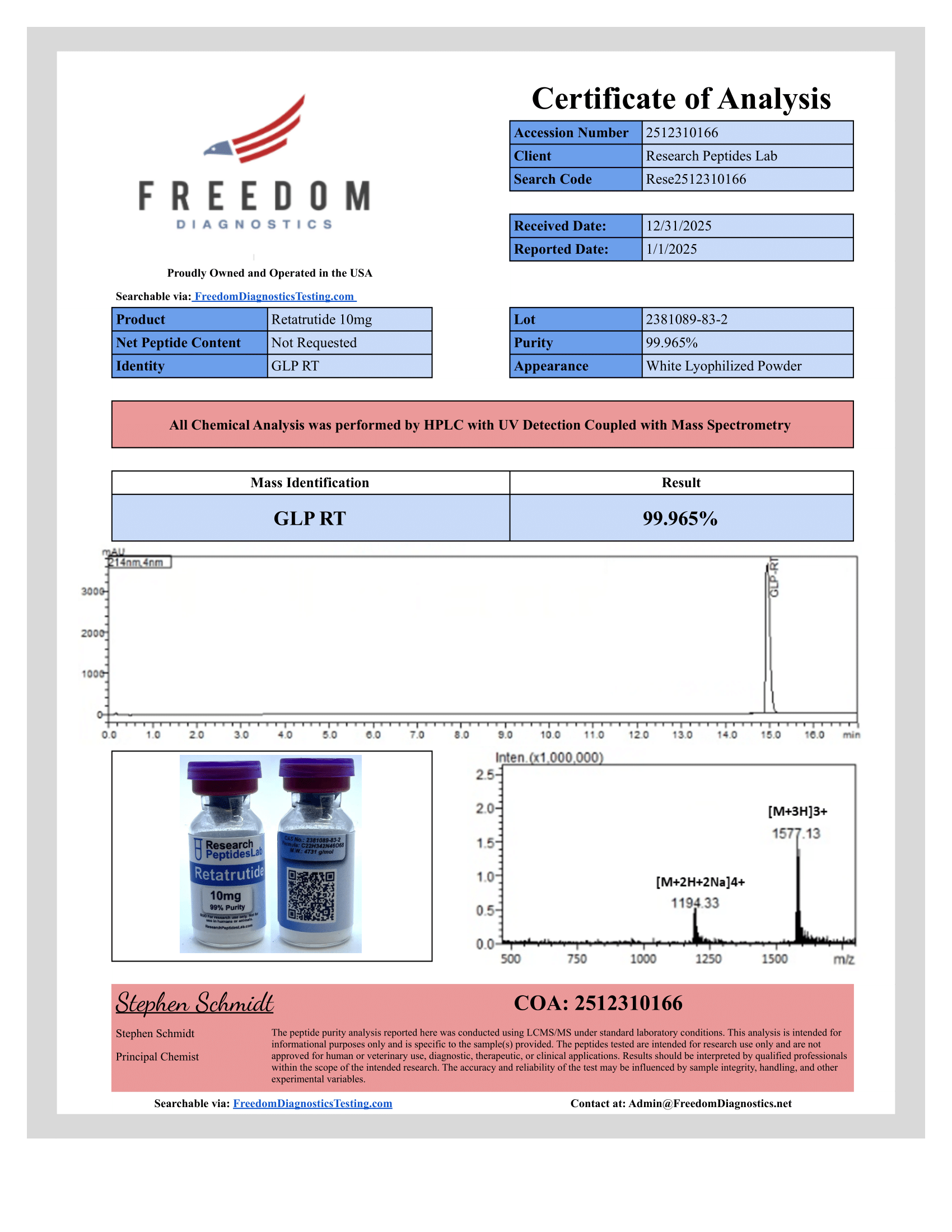
Lab Testing Notes
Each batch verified by independent third-party labs via HPLC (purity ?99%) and Mass Spectrometry (molecular weight confirmation). Full COA included with every order.
Mechanism of Action
GLP-3RT engages three distinct receptor systems: GLP-1R (glucagon-like peptide-1 receptor) — enhances insulin secretion, slows gastric emptying, and acts on hypothalamic appetite centers. GIPR (glucose-dependent insulinotropic polypeptide receptor) — potentiates insulin response and improves lipid metabolism. GCGR (glucagon receptor) — increases energy expenditure, promotes hepatic fat oxidation, and stimulates thermogenesis. The triple mechanism provides complementary metabolic effects beyond what dual agonists achieve.
Experimental Applications
Research applications include incretin receptor pharmacology, triple agonism vs. dual agonism comparative studies, energy expenditure and thermogenesis models, hepatic lipid metabolism, glucose-stimulated insulin secretion assays, gastric emptying kinetics, and appetite regulation neurocircuitry studies.
Reconstitution Guidelines
Reconstitute with bacteriostatic water. Inject slowly along the vial wall. Gently swirl until dissolved. Do not shake. Recommended: 1–2 mL per vial. Store at 2–8°C. Use within 30 days.
How Does GLP-3RT Compare?
GLP-1 & Metabolic Peptides
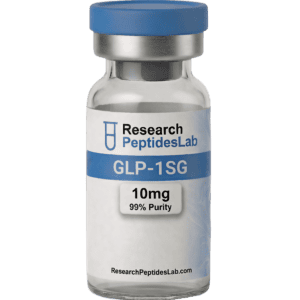
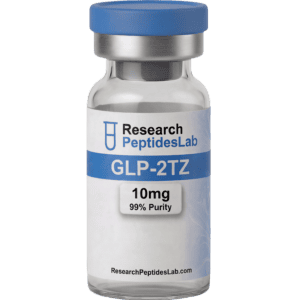
| Property | GLP-3RT | GLP-1SG | GLP-2TZ | AOD-9604 |
|---|---|---|---|---|
| Type | Triple GIP/GLP-1/Glucagon Agonist | GLP-1 Receptor Agonist | Dual GIP/GLP-1 Receptor Agonist | Modified hGH Fragment (176-191) |
| Molecular Weight | 4,731.28 | 4,113.58 | 4,813.45 | 1,815.08 |
| Amino Acids | 39 | 31 | 39 | 16 |
| CAS Number | 2381089-83-2 | 910463-68-2 | 2023788-19-2 | 221231-10-3 |
| Formula | C₂₂₁H₃₄₂N₄₆O₆₈ | C₁₈₇H₂₉₁N₄₅O₅₉ | C₂₂₅H₃₄₈N₄₈O₆₈ | C₇₈H₁₂₃N₂₃O₂₃S₂ |
| Current | View Product → | View Product → | View Product → |
Commonly Researched Together
Complementary compounds frequently paired with GLP-3RT in published studies
Sources & References
Peer-reviewed research
Triple-Hormone-Receptor Agonist GLP-3RT for Obesity — A Phase 2 Trial
View SourceRelated Peptides
Premium research peptides, lab-tested for purity