TB-500
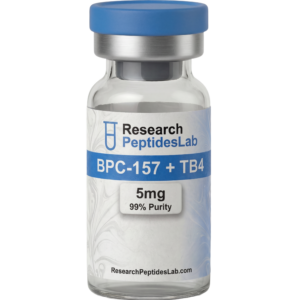
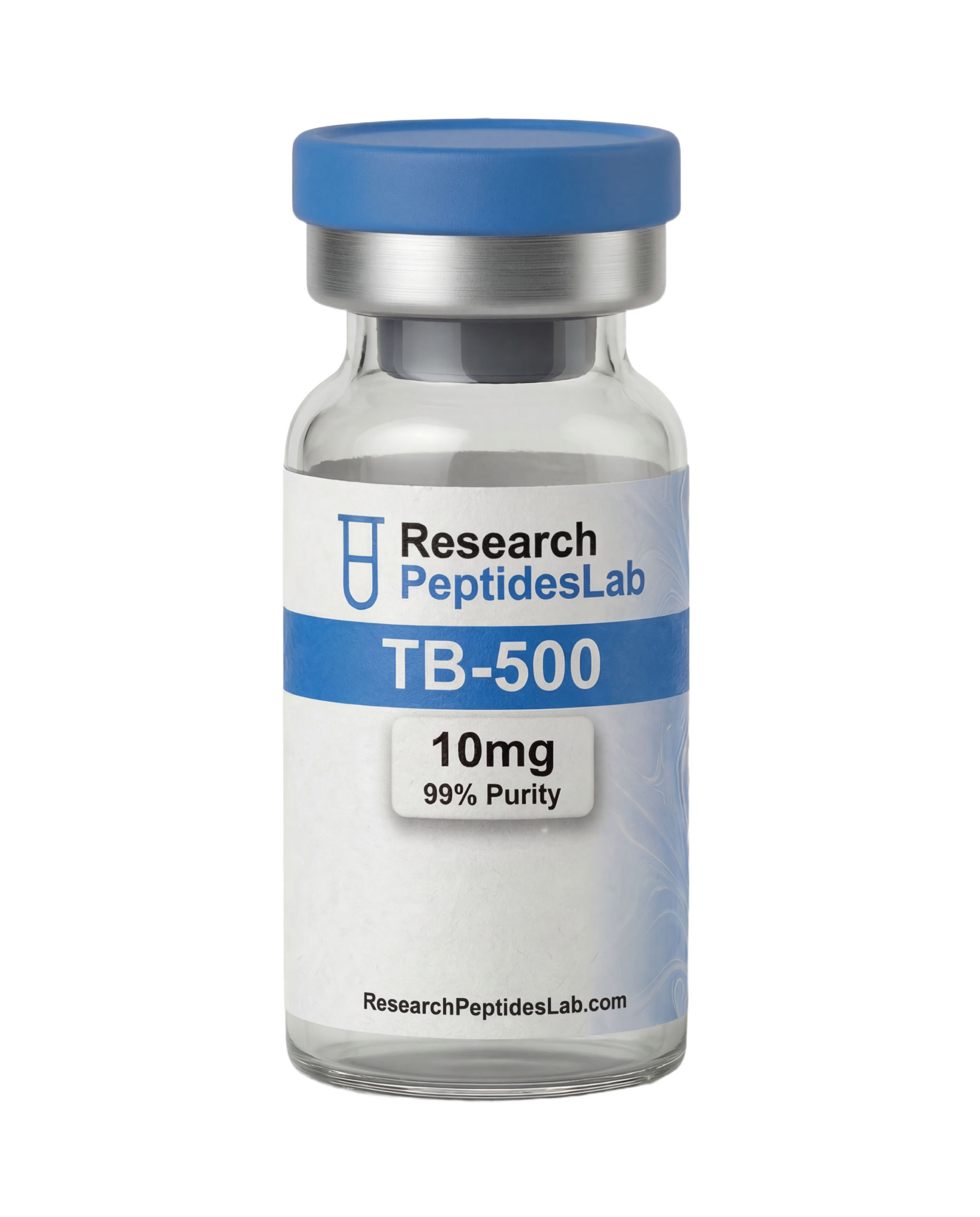
TB-500 is a synthetic fragment of Thymosin Beta-4 studied for its role in cell migration, actin regulation, and blood vessel formation in research models. It is frequently investigated alongside BPC-157 for synergistic tissue repair pathway analysis. For research purposes only.
Weekdays before 2PM EST
With Every Batch
Tested in USA








Buy now, pay later with Afterpay, Klarna & Affirm
Research Overview
TB-500 is a synthetic version of the active region of Thymosin Beta-4, a 43-amino acid naturally occurring peptide present in virtually all human and animal cells. TB-500 contains the key actin-binding domain of Thymosin Beta-4 and is researched for its role in cell migration, tissue repair, and anti-inflammatory signaling. It is one of the most widely studied regenerative peptides in preclinical models.
Mechanism of Action
TB-500 upregulates actin, a critical structural protein involved in cell motility, structure, and division. By sequestering G-actin monomers, it promotes actin polymerization at sites of tissue damage, facilitating cell migration into wound areas. TB-500 also downregulates inflammatory cytokines, promotes angiogenesis (new blood vessel formation), and supports keratinocyte and endothelial cell migration. Its anti-inflammatory activity includes MIF (macrophage migration inhibitory factor) modulation.
Experimental Applications
Research includes wound healing rate studies, cardiac tissue repair after ischemic injury, corneal wound models, inflammatory cytokine profiling, actin dynamics and cell migration assays, muscle and tendon repair models, neuroinflammation studies, and hair follicle stem cell activation research.
Compound Specifications
| Compound Type | Synthetic Thymosin Beta-4 Fragment |
| Purity | ≥ 99% |
| Appearance | White lyophilized powder |
| Storage | -20°C long-term; 2-8°C short-term |
| Testing Methods | HPLC, Mass Spectrometry |
| Packaging | Sealed sterile vial |
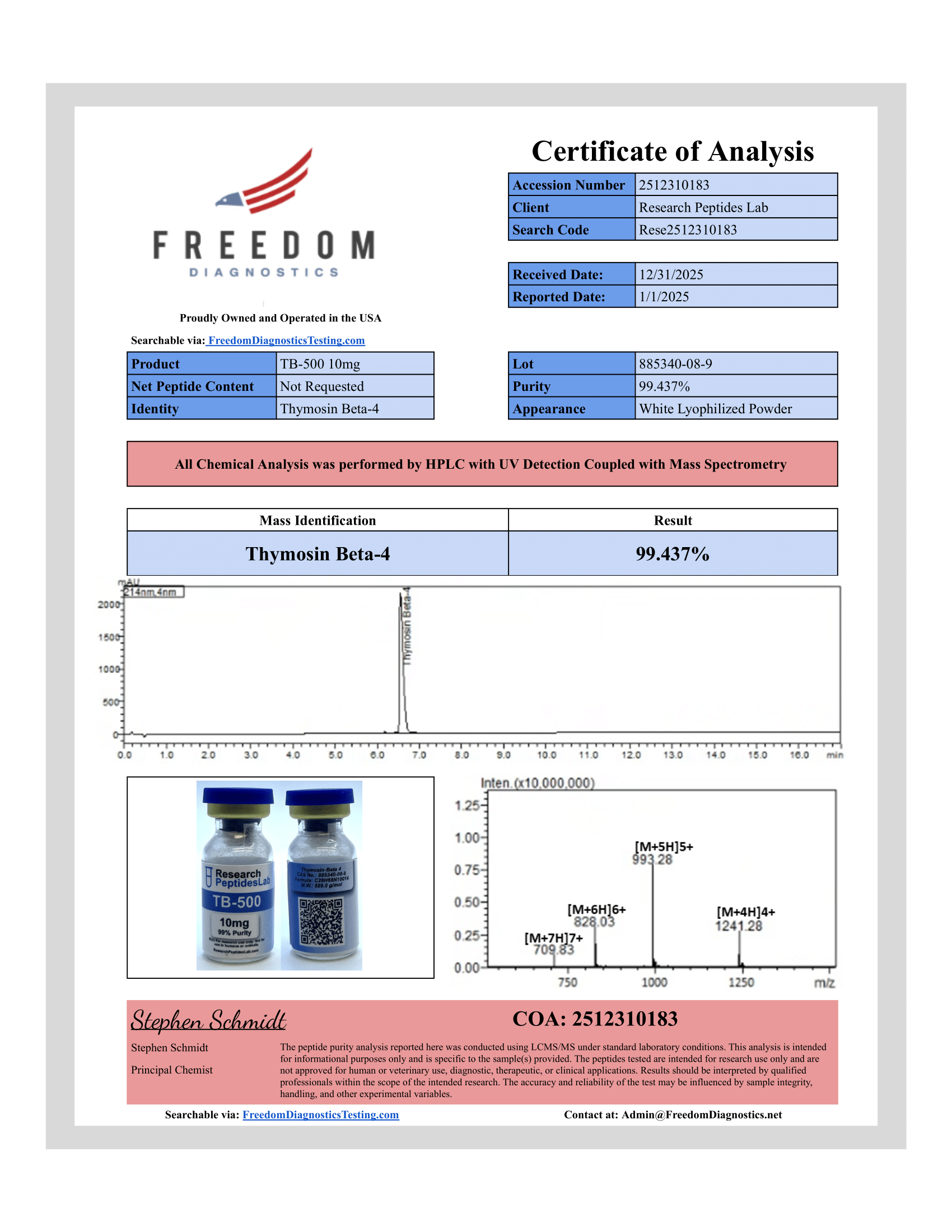
Certificate of Analysis
Lab Testing Notes
Independently tested via HPLC for purity (?99%) and Mass Spectrometry for identity. COA included with every order.
Mechanism of Action
TB-500 upregulates actin, a critical structural protein involved in cell motility, structure, and division. By sequestering G-actin monomers, it promotes actin polymerization at sites of tissue damage, facilitating cell migration into wound areas. TB-500 also downregulates inflammatory cytokines, promotes angiogenesis (new blood vessel formation), and supports keratinocyte and endothelial cell migration. Its anti-inflammatory activity includes MIF (macrophage migration inhibitory factor) modulation.
Experimental Applications
Research includes wound healing rate studies, cardiac tissue repair after ischemic injury, corneal wound models, inflammatory cytokine profiling, actin dynamics and cell migration assays, muscle and tendon repair models, neuroinflammation studies, and hair follicle stem cell activation research.
Reconstitution Guidelines
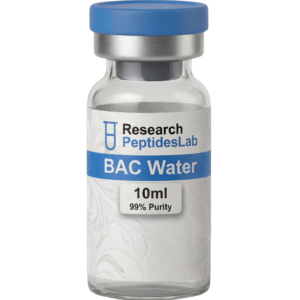
Reconstitute with bacteriostatic water. Inject slowly along the vial wall. Gently swirl to dissolve — do not shake. Recommended: 1–2 mL per vial. Store at 2–8°C. Use within 30 days.
Related Peptides
Premium research peptides, lab-tested for purity