Tesamorelin
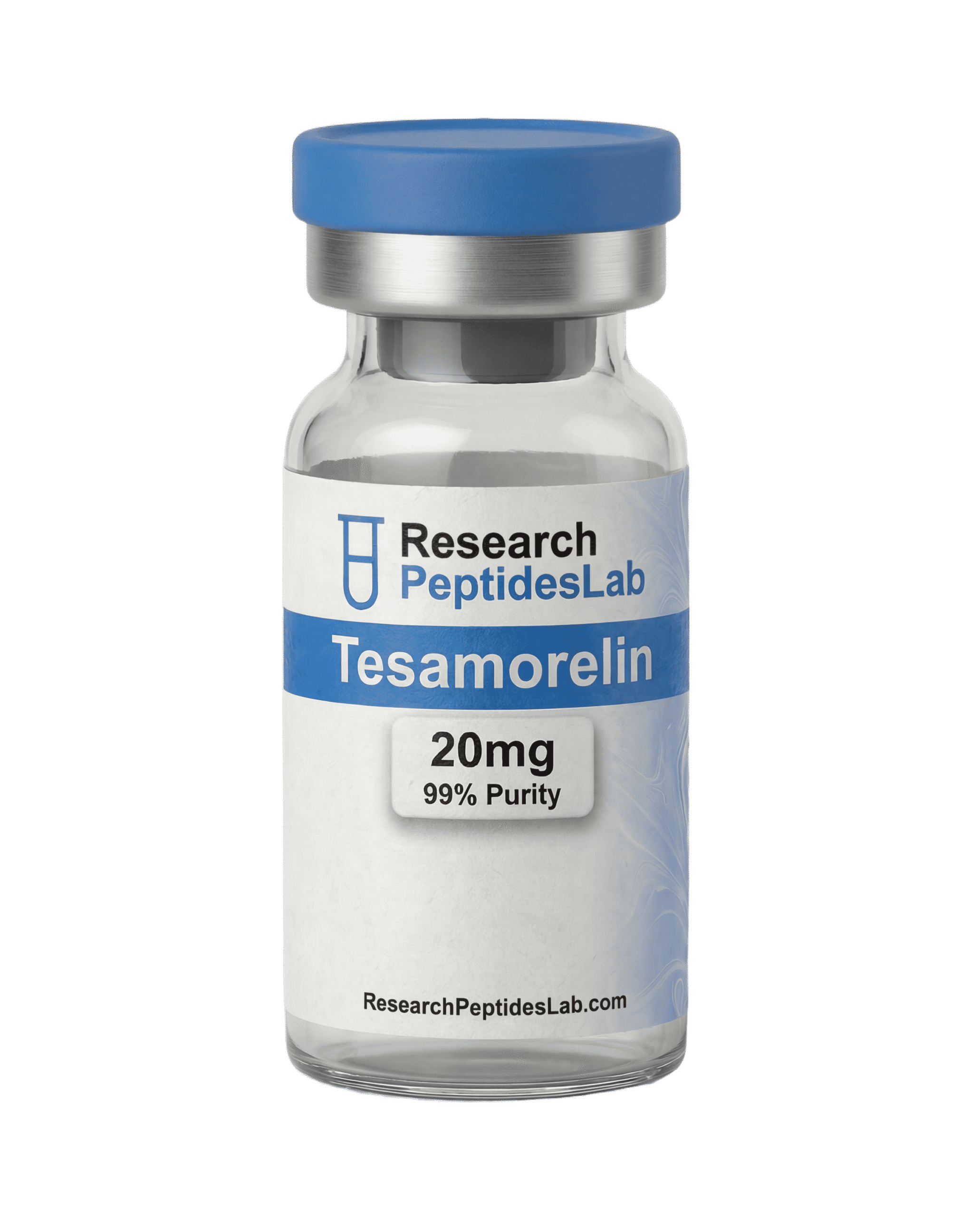
Tesamorelin is a stabilized GHRH analog with an N-terminal trans-3-hexenoic acid modification studied for enhanced receptor binding in GH-axis research. Laboratory investigations examine its effects on IGF-1 modulation and lipid metabolism signaling pathways. For research purposes only.
Weekdays before 2PM EST
With Every Batch
Tested in USA








Buy now, pay later with Afterpay, Klarna & Affirm
Research Overview
Tesamorelin is a synthetic GHRH analog consisting of the full 44-amino acid human GHRH sequence with a trans-3-hexenoic acid modification at the N-terminus. This modification enhances stability and bioavailability. Tesamorelin received FDA approval in 2010 (Egrifta®) and is the only GHRH analog specifically approved for reducing excess abdominal fat in a clinical context, making it a uniquely positioned compound in metabolic research.
Mechanism of Action
Tesamorelin binds to the GHRH receptor on pituitary somatotrophs, stimulating endogenous GH synthesis and pulsatile release. The trans-3-hexenoic acid modification protects the N-terminus from enzymatic degradation (DPP-IV), extending its biological half-life. The resulting GH elevation drives hepatic IGF-1 production and promotes lipolysis, particularly in visceral adipose tissue. Importantly, Tesamorelin preserves the natural GH feedback loop, unlike exogenous GH administration.
Experimental Applications
Research includes visceral adipose tissue reduction studies, GH/IGF-1 axis modulation in aging models, trunk fat distribution analysis, cognitive function and hippocampal neurogenesis studies, lipid metabolism research, and comparative pharmacology against Sermorelin and CJC-1295.
Compound Specifications
| Compound Type | Modified GHRH Analog (44 amino acids + hexenoic acid) |
| Purity | ≥ 99% |
| Appearance | White lyophilized powder |
| Storage | -20°C long-term; 2-8°C short-term |
| Testing Methods | HPLC, Mass Spectrometry |
| Packaging | Sealed sterile vial |
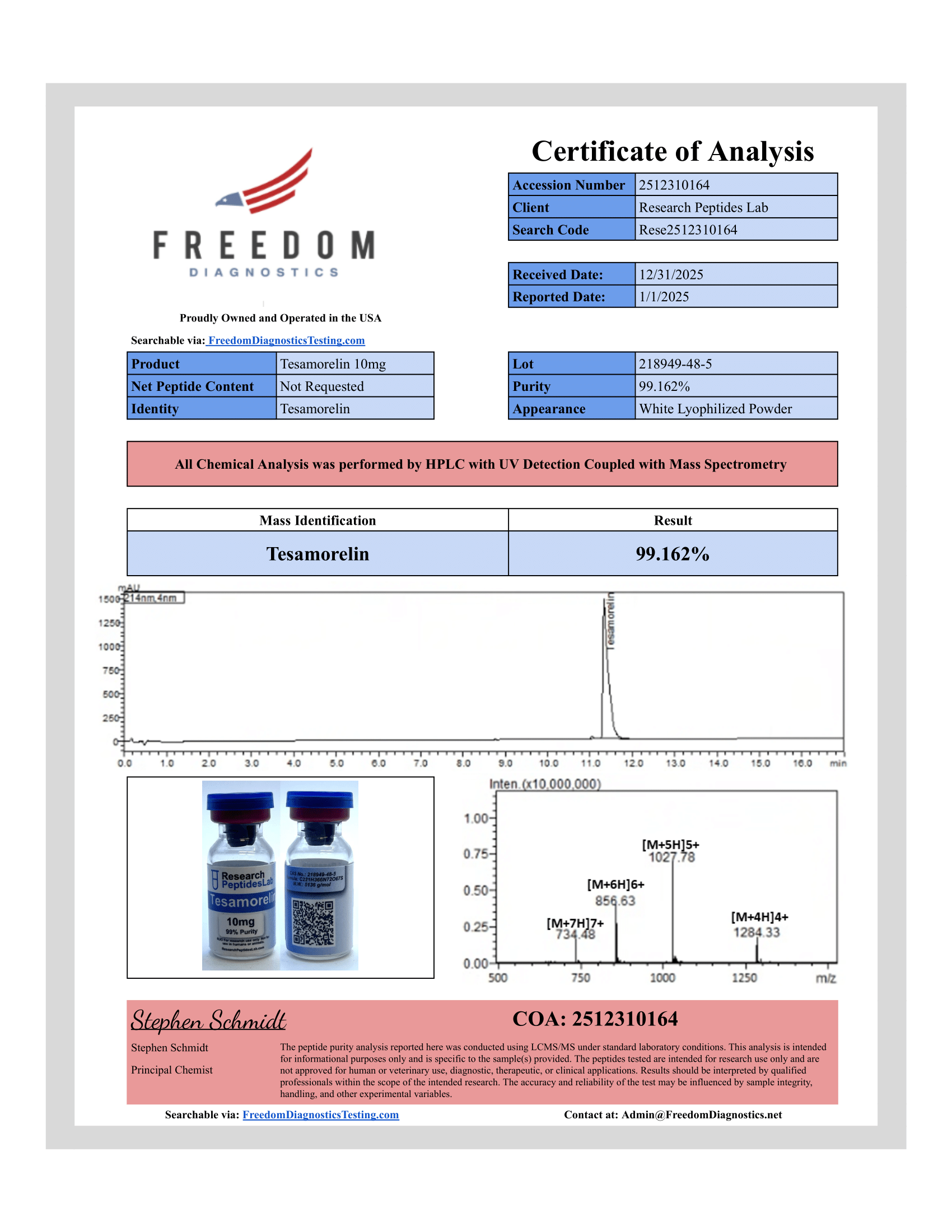
Certificate of Analysis
Lab Testing Notes
Each batch verified via HPLC (purity ?99%) and Mass Spectrometry. N-terminal modification integrity confirmed. COA available on this page.
Mechanism of Action
Tesamorelin binds to the GHRH receptor on pituitary somatotrophs, stimulating endogenous GH synthesis and pulsatile release. The trans-3-hexenoic acid modification protects the N-terminus from enzymatic degradation (DPP-IV), extending its biological half-life. The resulting GH elevation drives hepatic IGF-1 production and promotes lipolysis, particularly in visceral adipose tissue. Importantly, Tesamorelin preserves the natural GH feedback loop, unlike exogenous GH administration.
Experimental Applications
Research includes visceral adipose tissue reduction studies, GH/IGF-1 axis modulation in aging models, trunk fat distribution analysis, cognitive function and hippocampal neurogenesis studies, lipid metabolism research, and comparative pharmacology against Sermorelin and CJC-1295.
Reconstitution Guidelines
Reconstitute with bacteriostatic water. Inject slowly along the inner vial wall. Swirl gently to dissolve. Do not shake. Recommended: 1–2 mL per vial. Store at 2–8°C. Use within 30 days.
Related Peptides
Premium research peptides, lab-tested for purity